Streamlining KDP Publishing: The Strategic Value of No-Bleed Dot Grid Journal Interiors
The landscape of self-publishing has shifted dramatically over the last decade. What began as a platform primarily for text-heavy novels and non-fiction manuscripts has evolved into a robust ecosystem for functional print products. For professionals, creators, and entrepreneurs entering the Amazon Kindle Direct Publishing (KDP) space, the focus has moved from simple content generation to product engineering. At the intersection of this shift lies the KDP Dot Grid Journal Interior No Bleed template, a specific digital asset that addresses both technical printing constraints and evolving consumer preferences for analog organization tools.
Understanding why this specific format—a 6×9 blank dot grid journal without bleed—has become a staple in low-content publishing requires looking beyond the pages themselves. It represents a convergence of efficient workflow design, precise print-on-demand specifications, and a market demand for unobtrusive, high-utility stationery. This article explores the strategic relevance of these interiors, examining how they fit into broader business workflows and why the technical distinction of "no bleed" remains a critical factor for quality assurance and profitability.
The Technical Precision of No-Bleed Interiors
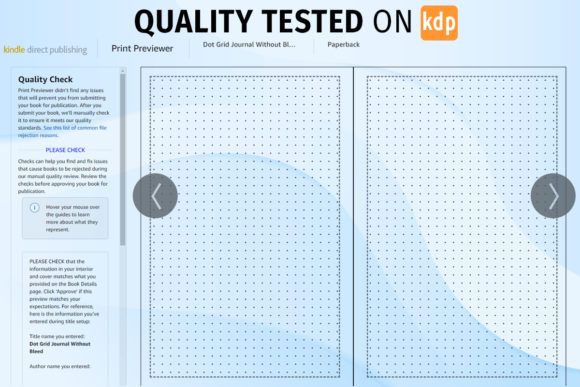
In the realm of print-on-demand, margins are not merely aesthetic choices; they are manufacturing realities. A KDP Dot Grid Journal Interior No Bleed is engineered specifically to accommodate the mechanical tolerances of digital printing presses used by Amazon. Unlike traditional offset printing where paper is trimmed after ink application, POD books are printed on pre-cut stock or trimmed with minimal margin for error. Selecting a no-bleed interior ensures that the dotted grid pattern maintains a consistent safety zone around the perimeter of every page.
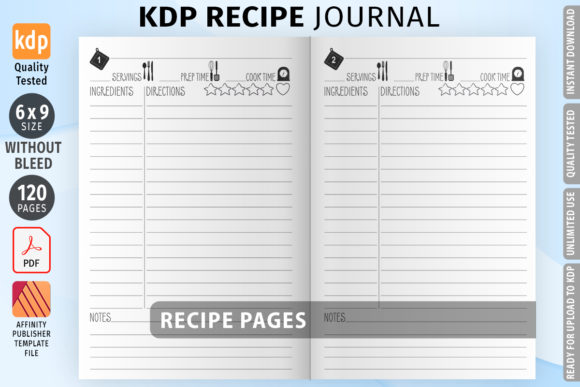
This technical specification serves two primary functions. First, it prevents the grid lines from being inadvertently cropped during the binding and trimming process, which can result in an uneven or unprofessional appearance. Second, it simplifies the upload process for publishers. When utilizing a pre-formatted 120-page template that includes a contact page and adheres strictly to no-bleed guidelines, creators eliminate the most common source of KDP rejection: margin errors. For entrepreneurs managing multiple SKUs, this reliability transforms the publishing process from a trial-and-error endeavor into a scalable system.
The choice of gray 70 Black for the dotted lines further demonstrates an understanding of print technology. Pure black (100% K) can sometimes appear too harsh against cream or white paper, creating visual vibration that distracts rather than guides. By utilizing a calibrated 70% opacity, the dots provide sufficient contrast for handwriting visibility while fading into the background when the page is filled with sketches, notes, or diagrams. This subtle balance is what separates a premium journal from a generic notebook, directly influencing customer reviews and repeat purchases.
Market Trends: The Resurgence of Analog Productivity
While we operate in an increasingly digital environment, there is a counter-trend among professionals and creatives toward analog tools for cognitive processing. Digital fatigue has driven a renewed interest in physical journals, not as nostalgic artifacts, but as productivity instruments. The dot grid format occupies a unique niche in this resurgence. Unlike lined paper, which dictates linear thought, or blank paper, which can induce paralysis through lack of structure, the dot grid offers flexible scaffolding.
This flexibility aligns perfectly with modern methodologies like Bullet Journaling, Zettelkasten, and agile sprint planning. Users require a canvas that adapts to their workflow rather than constraining it. A 6×9 size has emerged as the industry standard for this demographic because it balances portability with utility. It fits comfortably in professional bags, laptop sleeves, and travel organizers, making it an ideal companion for freelancers and remote workers who operate across multiple environments.
For KDP publishers, recognizing this user behavior is essential. The value proposition of a KDP Interior for no and low content books is not the paper itself, but the permission it grants the user to organize their thoughts freely. When sourcing or creating templates, the emphasis must be on usability. High-resolution PDFs ensure that the dots remain crisp at any zoom level during digital previewing, reassuring potential buyers of the product's quality before they purchase. The inclusion of a contact page within the 120-page count also signals professionalism, providing a dedicated space for ownership identification or brand connection, which adds perceived value to the end product.
Workflow Efficiency Through Professional Templates
Time is the most scarce resource for independent publishers and marketers. Creating a dot grid interior from scratch involves more than placing dots on a page; it requires mastering master pages, paragraph styles, and export settings to ensure print readiness. This is where the Affinity Publisher Template Source File becomes a strategic asset rather than just a convenience.
Affinity Publisher has gained traction among self-publishers as a powerful, subscription-free alternative to industry-standard software. Providing a source file in this format allows for maximum customization without locking creators into proprietary ecosystems. Publishers can adjust gutter margins, modify dot spacing, or add branding elements to differentiate their products in a saturated marketplace. However, for those seeking immediate deployment, the "no editing required" aspect of a ready-for-upload PDF cannot be overstated.
This duality supports different business models. New entrants can validate market demand quickly using the pre-made PDF, testing various cover designs and keywords without upfront design investment. Established brands can utilize the source file to create cohesive series with unique interior variations. In both cases, the template acts as a foundational infrastructure, allowing the publisher to focus on marketing, keyword research, and cover design—the elements that actually drive sales.
Quality Assurance and Consumer Expectations
The barrier to entry in low-content publishing is low, but the barrier to success is quality. Consumers have become sophisticated; they read reviews, examine "Look Inside" features, and compare products rigorously. A journal with faint, pixelated dots or inconsistent margins will quickly garner negative feedback that suppresses organic ranking. Quality testing on KDP is not a one-time event but a continuous standard.
Using a verified KDP Dot Grid Journal Interior No Bleed template mitigates risk. These templates are typically stress-tested against current KDP specifications, accounting for recent changes in trim sizes and safe zones. This proactive approach to quality control protects the publisher’s account health and brand reputation. Furthermore, the 120-page count is strategically chosen to optimize spine width for readability while keeping production costs low enough to allow for competitive pricing and healthy royalties.
It is crucial to remember that this product is a digital download comprising interior pages only. This distinction reinforces the division of labor in modern publishing. While the interior provides the functional consistency required for a notebook, the cover is the marketing hook. Successful publishers treat the interior as a stable commodity and the cover as a variable creative asset. This separation allows for rapid iteration based on seasonal trends, niche targeting, and aesthetic preferences without re-engineering the core product.
Strategic Customization and Brand Differentiation
In a marketplace flooded with generic options, differentiation often comes from micro-adjustments rather than radical reinvention. The ability to customize a dot grid template allows publishers to tailor products to specific sub-niches. A journal designed for architects might benefit from tighter dot spacing, while one aimed at mindfulness practitioners might utilize wider spacing and softer gray tones.
The Affinity Publisher source file facilitates this granularity. Publishers can experiment with adding subtle headers, footer numbering, or index sections without compromising the no-bleed integrity. This level of customization transforms a basic commodity into a specialized tool. For example, a marketer creating journals for a corporate retreat can incorporate company values or specific workshop frameworks directly into the interior, creating a bespoke product that commands a higher price point and deeper engagement than a mass-market alternative.
Moreover, maintaining a library of tested, high-quality interiors creates operational leverage. Once a reliable KDP Interior for no and low content books is validated, it can be repurposed across multiple projects. The same 6×9 dot grid foundation can serve as the basis for a student planner, a fitness tracker, or a creative sketchbook simply by changing the cover and title metadata. This modularity is key to building a sustainable publishing business that withstands market fluctuations.
Navigating the Digital-to-Physical Bridge
Ultimately, the relevance of the no-bleed dot grid journal interior lies in its role as a bridge between digital efficiency and physical utility. For the publisher, it represents a streamlined, risk-mitigated path to product creation. For the consumer, it represents a thoughtfully designed tool that respects their need for structure and freedom in equal measure.
As the KDP ecosystem continues to mature, the winners will be those who treat low-content publishing with the same rigor as traditional publishing. This means prioritizing technical accuracy, understanding user psychology, and leveraging professional tools to deliver superior products. The KDP Dot Grid Journal Interior No Bleed is more than a template; it is a component of a larger strategy focused on quality, scalability, and meeting the nuanced needs of a hybrid workforce. By anchoring your publishing efforts in professionally engineered interiors, you build a foundation capable of supporting long-term growth and brand authority in the competitive world of print-on-demand.