Reclaiming Cognitive Clarity: The Strategic Value of the Daily Planner Letter Gray 100 Pages
In an era defined by digital saturation and notification fatigue, professionals across industries are increasingly seeking analog anchors to stabilize their workflows. The resurgence of structured paper planning is not merely a nostalgic trend; it is a strategic response to the cognitive overload inherent in modern entrepreneurship and creative work. For marketers, freelancers, and business leaders, the Daily Planner Letter Gray 100 Pages represents more than a stationery item—it is a tactile interface for executive function, designed to bridge the gap between high-level strategy and granular execution.
This specific format has gained traction because it addresses a critical pain point in current productivity ecosystems: the friction between digital ideation and physical action. While software excels at storage and collaboration, it often fails at fostering the deep focus required for complex problem-solving. By utilizing a standardized Letter size (8.5x11) layout in a neutral gray aesthetic, this planner removes visual noise and decision fatigue, allowing users to externalize their mental load effectively. Understanding why this tool is resonating with high-performers requires examining the broader shifts in how we manage attention, prioritize tasks, and structure our days in a post-always-on economy.
The Shift Toward Intentional Analog Workflows
The market for productivity tools has bifurcated. On one side, there is an endless stream of AI-driven apps promising automation. On the other, there is a growing demand for "slow productivity" tools that enforce boundaries and intentionality. The Letter Daily Planner 100 pages Color Gray Size 8,5x11 sits squarely in this latter category, serving as a dedicated container for daily intention.
Industry observers note that burnout among knowledge workers is frequently linked to the lack of separation between planning and doing. Digital devices conflate these states; the same screen used to check email is used to organize tasks, leading to reactive rather than proactive behavior. A physical planner creates a distinct psychological boundary. When a professional opens this planner, they are signaling to their brain that it is time for structured thought, not passive consumption. This distinction is vital for entrepreneurs and creators who must constantly toggle between visionary thinking and logistical management.
Furthermore, the choice of a gray color scheme is significant. In design psychology, neutral tones reduce cognitive strain compared to high-contrast or multicolor layouts. For individuals processing vast amounts of information daily, a minimalist gray palette acts as a visual quiet zone, ensuring that the content of the plan takes precedence over the decoration of the page. This aligns with the broader "calm technology" movement, which advocates for tools that respect human attention spans rather than competing for them.
Anatomy of Focus: Beyond Simple Task Listing
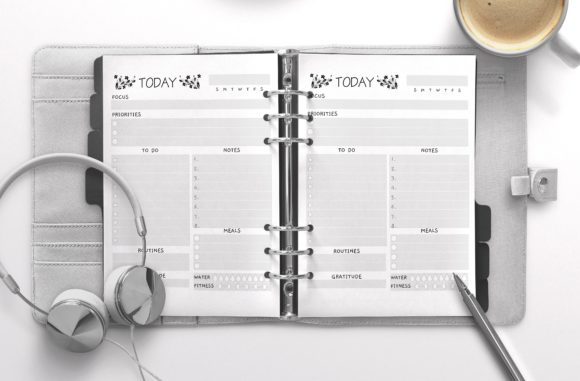
Traditional to-do lists are often graveyards for good intentions because they lack context and hierarchy. The efficacy of the Daily Planner Letter Gray 100 Pages lies in its comprehensive architecture, which forces users to engage with multiple dimensions of their day simultaneously. It moves beyond linear task management to holistic daily orchestration.
Day Focus and Priorities as Cognitive Anchors
The inclusion of dedicated sections for Day Focus and Priorities addresses the "urgency bias" that plagues many professionals. Without explicit prompts to define what matters most, the brain defaults to whatever is loudest or easiest. By requiring users to articulate a singular Day Focus before listing tasks, the planner enforces a top-down approach to productivity. This mirrors the strategic alignment practices used in agile project management but applies them to personal output. For a freelancer juggling multiple clients, or a marketer managing concurrent campaigns, this feature ensures that high-value activities are not displaced by administrative trivia.
Integrating Biological Rhythms with Professional Output
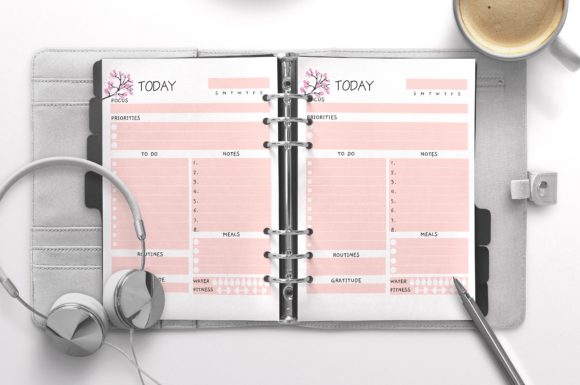
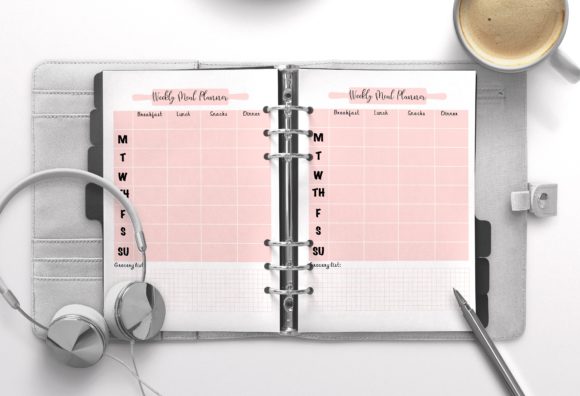
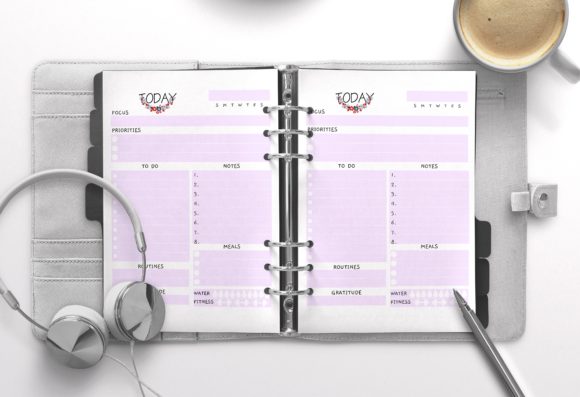
A notable evolution in workplace wellness is the recognition that professional performance is inextricably linked to biological maintenance. This planner integrates Meals, Water Tracker, Fitness Tracker, and Routines directly alongside professional tasks. This is not a lifestyle add-on; it is a performance optimization feature.
Research consistently shows that hydration, nutrition, and movement directly impact executive function and decision-making quality. By placing these trackers on the same page as business priorities, the planner validates self-care as a prerequisite for success rather than a reward for it. For entrepreneurs working long hours, this visual integration serves as a necessary reminder that sustaining energy levels is part of the job description. It reframes health metrics as key performance indicators for the individual.
The Role of Notes and Reflection
The Notes section provides essential overflow space for non-linear thinking. Creative professionals and strategists know that insights rarely arrive in neat bullet points. Having a dedicated area for unstructured thought allows for the capture of emergent ideas without disrupting the primary task list. This supports the concept of "cognitive offloading," where the paper holds the raw data of thought so the mind can focus on synthesis and analysis.
Scalability and Commercial Utility for Creators
For coaches, consultants, and digital product creators, the value proposition extends beyond personal use. The package includes two distinct PDF assets: a single-file version for personal printing and a 100-file split version optimized for commercial application. This duality reflects the needs of the modern creator economy, where professionals often monetize their own productivity systems.
The ability to utilize these files for commercial use transforms the planner from a consumable into a business asset. Coaches can print branded copies for workshop participants, creating a tangible takeaway that reinforces their methodology. Digital marketers can bundle the planner as a lead magnet or value-add for course students. The Letter size (8.5x11) is particularly advantageous here, as it is the standard document size in North America, ensuring compatibility with home printers, office copiers, and professional print-on-demand services without requiring resizing or reformatting.
This readiness for commercial deployment speaks to a larger trend in the information economy: the shift from selling abstract advice to providing actionable tools. Clients and audiences are increasingly looking for implemented solutions. Providing a structured, ready-to-print planner demonstrates a commitment to their practical success, enhancing the perceived value of professional services.
Adapting to Hybrid and Flexible Work Environments
The relevance of this specific planner format is amplified by the normalization of hybrid work. In a traditional office, environmental cues dictated workflow. In remote or hybrid settings, those cues have vanished. The Letter Daily Planner 100 pages Color Gray Size 8,5x11 serves as a portable office environment.
Its full-page Letter size offers ample real estate that smaller pocket planners cannot match. This surface area is crucial for professionals who need to map out complex projects visually or track multiple streams of activity simultaneously. When working from a home desk or a co-working space, spreading out a full-sized planner creates a defined workspace within a shared environment. It signals availability and focus to others, even in a virtual setting where the planner might be visible on camera during planning sessions.
Moreover, the 100-page count strikes a pragmatic balance. It is substantial enough to establish a habit and track progress over a quarter (approximately three months), yet finite enough to prevent the intimidation factor associated with year-long commitments. This quarterly cadence aligns with modern business planning cycles, allowing professionals to reset, review, and recalibrate their systems regularly. In a rapidly changing market, the agility to pivot every 90 days is often more valuable than rigid annual adherence.
Why the Market is Paying Attention Now
The growing interest in tools like the Daily Planner Letter Gray 100 Pages correlates with a maturity in the productivity conversation. We are moving past the era of "life hacking" and optimization for its own sake, toward a period of sustainable performance. Professionals are realizing that efficiency without clarity is merely accelerated chaos.
This planner succeeds because it does not promise to do the work for you. Unlike AI tools that generate content or automate emails, this planner demands active participation. It requires the user to pause, reflect, and make deliberate choices about how to spend their time and energy. In doing so, it restores agency to the worker. As automation handles more routine cognitive tasks, the human capacity for judgment, prioritization, and intentional living becomes the premium skill set. This planner is a training ground for those skills.
Additionally, the aesthetic neutrality and professional formatting make it suitable for corporate environments where overly decorative planners might feel out of place. It bridges the gap between personal journaling and professional documentation, making it acceptable to bring into board meetings, client consultations, and strategy sessions. This versatility ensures that the planning habit can be maintained consistently across different contexts, reinforcing the neural pathways associated with organized thinking.
Practical Implementation for Modern Professionals
To maximize the utility of this system, users should view the planner as part of a larger ecosystem rather than a standalone solution. For example, digital calendars remain superior for scheduling and reminders; the planner is superior for prioritization and synthesis. The most effective workflows currently observed involve using digital tools for logistics and this analog system for strategy and execution.
Freelancers might use the To Do section to break down client deliverables while using the Notes area to draft initial concepts. Marketers might use the Priorities section to identify the single campaign metric that matters most for the day, preventing distraction by vanity metrics. Entrepreneurs might leverage the Routines tracker to ensure foundational business development activities occur daily, regardless of urgent fires.
Ultimately, the Daily Planner Letter Gray 100 Pages is a response to the complexity of modern professional life. It acknowledges that we are whole people with biological needs, creative aspirations, and strategic responsibilities. By providing a structured, aesthetically calm, and commercially viable framework for managing these elements, it offers a path toward greater clarity and control. In a world that constantly demands more, the power of a well-designed page lies in its ability to help us discern what actually deserves our attention.