Japanese Writing Practice KDP Interior: A Creator’s Guide
Creating a successful low-content or medium-content book on Amazon KDP requires more than just a catchy cover; the interior experience determines whether a customer leaves a positive review or returns the product. For publishers targeting the language learning niche, a specialized Japanese Writing Practice KDP Interior serves as the foundational asset that bridges the gap between digital design and physical utility. This resource is not merely a collection of blank lines but a structured environment designed specifically for practicing Hiragana, Katakana, and Kanji. When you utilize a pre-tested, high-resolution template set, you eliminate the technical guesswork that often plagues new publishers, allowing you to focus on marketing and audience building rather than formatting margins.
Streamlining Production with Editable Source Files
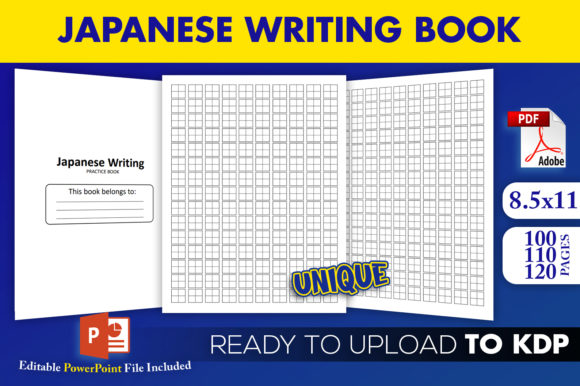
The most significant advantage of this specific package is the inclusion of an editable PowerPoint (PPTX) source file. While many KDP assets are sold as static PDFs, providing the source file transforms the product from a finished good into a flexible manufacturing tool. For entrepreneurs and freelancers managing multiple pen names or brands, this editability is crucial. You can adjust the header fonts to match your brand identity, modify the instructional text at the top of each page, or even alter the grid opacity to suit different paper quality preferences.
Consider a scenario where you identify a sub-niche within Japanese learning, such as "Japanese Writing Practice for Kids" versus "Business Japanese Kanji Drills." With a static PDF, you would need to purchase two separate products or hire a designer to create variations. With the editable PPTX included in this download, you can duplicate the master file and customize the interior for both demographics in under an hour. This capability directly supports business scalability and allows for rapid A/B testing of different interior layouts to see which version resonates best with your target audience.
Technical Compliance and Risk Mitigation
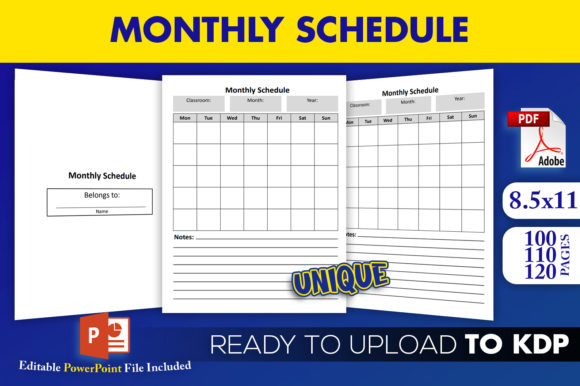
One of the most common pain points for KDP creators is the rejection notification due to margin errors, bleed issues, or low-resolution images. Language learning books are particularly susceptible to these errors because they rely heavily on precise grid lines and guide boxes. If a Genkō yōshō (manuscript paper) grid is misaligned by even a fraction of an inch during printing, the book becomes unusable for serious students. The three PDF files included in this package have been explicitly tested on KDP, meaning the trim size of 8.5×11 inches and all internal safety margins have already passed validation checks.
This pre-validation saves hours of troubleshooting and prevents the loss of advertising spend on books that might get flagged after launch. For professionals and small business owners, time is a finite resource. By utilizing interiors that are confirmed ready for upload, you reduce the production cycle from days to minutes. This reliability is essential for maintaining a consistent publishing schedule, especially when capitalizing on seasonal trends like back-to-school periods or New Year resolution spikes in January.
Strategic Page Count Variations for Pricing Flexibility
The download includes three distinct PDF versions featuring 100, 110, and 120 pages. This variation is not arbitrary; it is a strategic feature that supports diverse pricing and royalty goals. On Amazon KDP, printing costs are calculated based on page count and ink type. Having three options allows you to optimize your profit margins without redesigning the book.
- 100-Page Version: Ideal for budget-friendly entry-level workbooks or travel-sized practice journals where keeping the retail price below $6.99 is necessary to remain competitive.
- 110-Page Version: A balanced middle ground that often hits the sweet spot for perceived value versus printing cost, suitable for standard semester-length practice books.
- 120-Page Version: Best positioned as a comprehensive workbook or premium edition, allowing for a higher price point that absorbs printing costs while delivering substantial content to dedicated learners.
For marketers and bloggers who bundle digital products with physical books, these variations allow you to align the physical product's depth with your digital course curriculum. If your online course covers 10 weeks of material, the 100-page version may suffice. If you offer a masterclass, the 120-page version reinforces the premium nature of your educational ecosystem.
Pedagogical Value and User Experience Design
Beyond technical specifications, the effectiveness of a Japanese Writing Practice KDP Interior lies in its pedagogical structure. High-resolution interiors ensure that guide boxes, stroke order indicators, and gray-scale tracing characters print crisply on standard Amazon paperback paper. Blurry or pixelated grids frustrate learners and lead to negative reviews citing poor print quality. This asset pack prioritizes visual clarity, ensuring that the distinction between practice strokes and guide lines remains sharp even after repeated erasing and rewriting.
Educators and tutors can leverage these high-quality interiors as supplementary materials. Instead of creating worksheets from scratch, a teacher can assign specific sections of the published book as homework. The professional presentation of the interior lends credibility to the educator’s recommendations. Furthermore, for self-published authors who are not native Japanese speakers, using a professionally designed interior mitigates the risk of cultural or structural inaccuracies in the practice layout, ensuring the learning tool respects traditional writing standards.
Assessing Fit and Customization Needs
While this Japanese Writing Practice KDP Interior offers substantial benefits, it is important to evaluate whether it aligns with your specific project goals. The 8.5×11 trim size is the industry standard for workbooks, offering ample space for adult handwriting and detailed Kanji practice. However, if your target audience consists primarily of young children with smaller hands, or travelers needing a pocket-sized reference, this specific trim size may be too large. In such cases, you would need to resize the PPTX elements significantly or seek a different format.
Additionally, while the editable source file provides immense freedom, it assumes a basic proficiency with PowerPoint. Users unfamiliar with manipulating master slides or adjusting grouped objects may face a learning curve. It is advisable to test the editability of the file before committing to a full production run. For those seeking a completely unique layout that deviates significantly from standard manuscript paper styles, this template serves best as a starting foundation rather than a final solution. Comparing this option against custom design services is recommended if your brand requires proprietary illustration integration or non-standard grid systems.
Maximizing ROI Through Efficient Asset Management
For freelancers and agencies managing KDP accounts for clients, efficiency translates directly to profitability. This asset pack consolidates multiple needs—source editing, print-ready PDFs, and variable lengths—into a single download. This reduces vendor management overhead and simplifies file organization. When you can deliver three viable product variations to a client using one licensed asset, your effective hourly rate increases.
Moreover, the high-resolution nature of these interiors future-proofs your investment. As printing technology improves and customer expectations for quality rise, having vector-based or high-DPI raster elements ensures your book does not look dated. This longevity is vital for evergreen niches like language learning, where a well-designed workbook can generate passive income for years. By treating this Japanese Writing Practice KDP Interior as a core component of your publishing infrastructure rather than a disposable template, you build a sustainable asset library that supports long-term business growth and creative consistency.