Hexagonal Grid Paper Letter Magenta: Practical Applications for Creators and Publishers
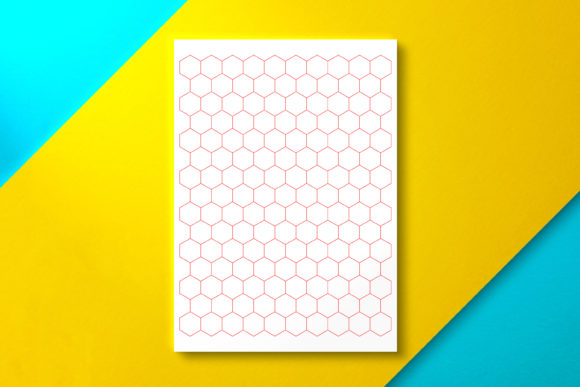
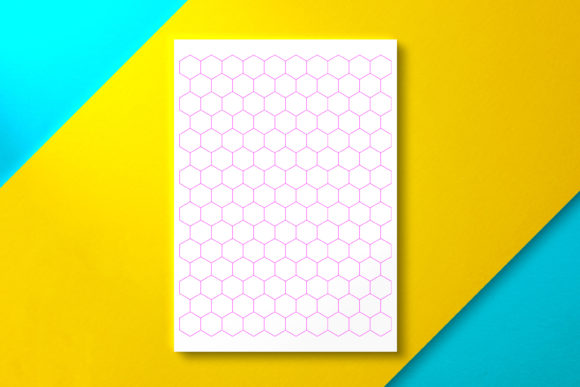
When most people think of graph paper, they imagine standard blue squares used for math homework or architectural drafts. However, Hexagonal Grid Paper Letter Magenta serves a distinctly different purpose in the creative and professional landscape. This specialized template combines the geometric utility of isometric grids with a vibrant magenta line color on standard 8.5x11 inch letter-sized paper. It is not merely an aesthetic choice; the hexagonal structure supports specific types of spatial reasoning, artistic rendering, and organizational planning that square grids simply cannot accommodate.
For digital creators, educators, and self-publishers, having access to ready-to-use PDF files in both 1cm and 2cm grid sizes eliminates hours of manual formatting. Whether you are designing a low-content book for Amazon KDP, creating chemistry worksheets, or sketching isometric game assets, this resource provides a precise foundation. The magenta color offers high contrast against black ink or graphite, making guidelines visible without overwhelming the final design, while the letter size ensures compatibility with standard home printers and commercial publishing requirements.
Why Hexagons Matter in Creative and Technical Work
The geometry of a hexagon allows for three-axis movement rather than the two-axis limitation of square paper. This makes Hexagonal Grid Paper Letter Magenta essential for anyone working in isometric projection. Artists and designers use this grid to draw 3D objects, buildings, and characters with accurate perspective without needing complex vanishing points. The 60-degree angles inherent in the hex grid naturally guide the hand toward proper spatial relationships.
Beyond art, hex grids are fundamental in scientific education. Organic chemistry relies heavily on hexagonal structures to represent benzene rings and other molecular compounds. Educators often prefer magenta guidelines because they distinguish the worksheet from standard notebook paper, helping students visually categorize their notes. For homeschoolers and tutors, printing a 100-page batch of 1cm hex grids creates a dedicated workbook for molecular modeling that feels distinct from general science journals.
Choosing Between 1cm and 2cm Grid Sizes
Selecting the right scale is critical for the intended outcome. The 1cm hexagonal grid is dense and detailed, making it ideal for:
- Molecular Diagrams: Fitting multiple chemical structures on a single page.
- Detailed Isometric Art: Rendering small mechanical parts or intricate architectural features.
- Data Visualization: Creating compact hex maps for statistical representation.
- Handwriting Practice: Smaller cells help refine fine motor skills for younger learners.
Conversely, the 2cm hexagonal grid offers more breathing room. This larger scale suits scenarios where clarity and boldness take precedence over density. Game designers mapping out board game tiles, bullet journal enthusiasts creating decorative headers, or teachers demonstrating concepts at the front of a classroom will find the 2cm size more legible. When preparing files for KDP upload, consider your target audience's age and dexterity; adult coloring books or advanced technical guides often benefit from the precision of 1cm, while activity books for children or broad-stroke planners work better with 2cm.
Commercial Publishing and KDP Readiness
For entrepreneurs and self-publishers, time is inventory. Manually generating consistent hexagonal grids across 100 pages is tedious and prone to alignment errors. These product files are specifically optimized for commercial use and KDP upload. The margins are set correctly for letter-size printing, ensuring no content gets trimmed during the binding process. The magenta lines are calibrated to print clearly on both standard office laser printers and commercial offset presses, avoiding the common issue of colored guidelines appearing too faint or pixelated.
Publishers can utilize these templates to create niche products that face less competition than standard lined journals. Consider the market for "Isometric Drawing Pads for Beginners" or "Organic Chemistry Lab Notebooks." By using pre-formatted Hexagonal Grid Paper Letter Magenta, you can focus on cover design, keyword research, and marketing rather than interior formatting. The inclusion of both single-page and 100-page bundles allows for flexibility; use the single pages to test print quality and color accuracy before committing to a full manuscript upload.
Real-World Scenarios for Diverse Users
Game Designers and Developers:
Hex grids are the gold standard for strategy games and RPG maps because they eliminate the diagonal movement ambiguity found in square grids. A freelance game designer might use the 2cm magenta template to prototype level layouts physically before digitizing them. The distinct color helps separate terrain notes from environmental sketches during the brainstorming phase.
Educators and Tutors:
A chemistry tutor preparing custom lesson plans can print the 1cm version to create practice sheets for drawing hydrocarbons. Unlike generic internet downloads, these high-resolution PDFs ensure crisp lines that don't smear when students erase mistakes. The magenta color also aids accessibility for students who struggle with low-contrast gray lines.
Crafters and DIY Enthusiasts:
Quilters and sewists frequently use hexagons for English paper piecing. While fabric templates exist, planning the overall quilt layout requires paper visualization. Printing the 2cm grid allows crafters to map out color gradients and pattern repeats on letter-sized sheets that fit into standard project binders.
Marketers and Visual Thinkers:
Mind mapping on hex grids encourages non-linear thinking. Marketing teams brainstorming campaign ecosystems can use the interconnected nature of hexagons to visualize relationships between channels, audiences, and messaging. The magenta aesthetic adds a layer of brand differentiation when these internal documents are shared or presented.
Practical Considerations Before Downloading or Buying
Before integrating Hexagonal Grid Paper Letter Magenta into your workflow, evaluate your output medium. If you plan to scan your work digitally, test how the magenta interacts with your scanner’s desaturation settings. Some artists prefer magenta specifically because it can be easily filtered out in Photoshop using channel mixers, leaving only the black ink drawing behind. Verify this compatibility with your specific software if clean digital extraction is your goal.
Consider the paper weight you intend to use. While these PDFs are formatted for standard letter paper, heavy marker usage on thin copy paper may cause bleed-through. The magenta ink is generally lighter than black, but if you are creating a premium KDP product, order a proof copy to check opacity. For personal use, pairing these templates with 70lb+ text paper enhances the user experience significantly.
Finally, assess the licensing terms for commercial application. Since these files are marked as ready for commercial use and KDP upload, confirm whether attribution is required or if the license permits unlimited derivative works. Understanding these parameters upfront prevents platform compliance issues later. Whether you are a solo creator building a passive income stream or a teacher enhancing student engagement, ensuring your resource aligns with both technical needs and legal boundaries maximizes the value of your investment.
Maximizing Utility Across Formats
Versatility extends beyond physical printing. Digital note-taking app users can import these PDFs as background templates for tablets. The vector-quality nature of well-made hex grids means they remain sharp even when zoomed in on a screen. Students using styluses appreciate the tactile feedback of writing over a structured grid, and the magenta color reduces eye strain compared to stark black grids on backlit displays.
Ultimately, Hexagonal Grid Paper Letter Magenta bridges the gap between functional geometry and creative expression. It solves specific problems—isometric accuracy, molecular representation, strategic mapping—that standard stationery cannot. By leveraging ready-made, commercially cleared files in appropriate scales, users bypass technical friction and focus entirely on the quality of their work, education, or published products.