Evaluating the Daily KDP Interior Template: Format, Customization, and Publishing Fit
Selecting the right interior for a low-content book is less about finding a generic layout and more about matching specific technical specifications with market demand. The Daily KDP Interior Template serves as a foundational resource for publishers targeting the 8.5″ x 11″ planner niche. Unlike open-ended design projects that require building layouts from scratch, this template provides a pre-structured 120-page framework designed specifically for Amazon’s print-on-demand requirements. For creators comparing various digital assets, understanding the distinction between a static PDF and an editable PPTX source file is critical for long-term publishing viability.
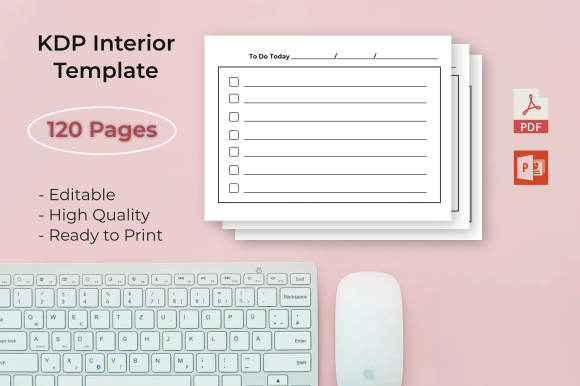
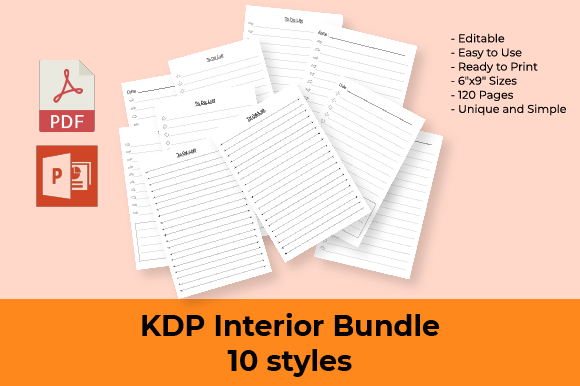
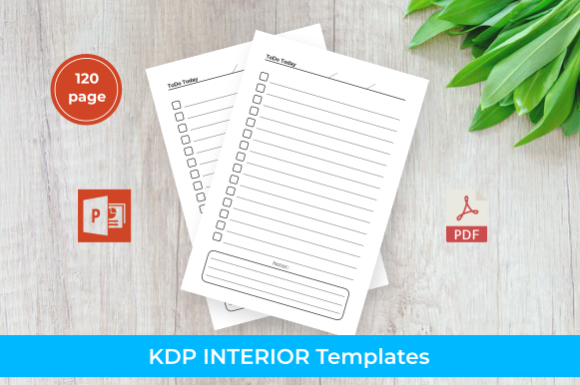
This specific template package includes both high-quality print-ready PDFs and PowerPoint (PPTX) source files. This dual-format approach addresses two distinct publisher needs: immediate upload capability and future customization potential. When evaluating this against other interior options, the inclusion of the PPTX file shifts the product from a simple "done-for-you" asset to a modifiable base layer. This distinction matters significantly for adults aged 20–50 who are building a portfolio rather than publishing a single title, as it allows for iterative testing without recurring design costs.
Technical Specifications and Platform Compliance
Amazon KDP has strict margin and bleed guidelines that frequently cause rejection or poor print quality when ignored. This Daily KDP Interior Template is configured with no bleed at 8.5″ x 11″ inches. The "no bleed" specification is a deliberate choice for daily planners, as it ensures that text and functional elements remain safely within the printable area regardless of minor mechanical shifts during the binding process. Publishers comparing this to full-bleed alternatives should note that no-bleed interiors generally have lower rejection rates and are safer for text-heavy functional books like planners.
The 120-page count is another strategic specification. In the daily planner category, page count directly correlates to perceived value and production cost. A 120-page book offers approximately three to four months of daily tracking space, positioning it as a quarterly planner or a specialized project tracker rather than a full-year volume. When comparing this to thinner 80-page options or thicker 200-page volumes, the 120-page format often hits a sweet spot for spine width visibility on shelves while keeping printing costs low enough to maintain competitive royalty margins. Users must verify their current royalty calculator inputs against this specific page count to ensure profitability at their intended price point.
PDF Versus PPTX: Assessing Editability Needs
A primary decision factor when choosing a KDP interior is the level of post-purchase flexibility required. Many low-cost or free interiors are distributed solely as flattened PDFs. While sufficient for immediate use, PDF-only files lock the publisher into the existing design. If a creator wants to change the header font, adjust the line spacing, or add a proprietary branding element, a PDF-only template requires expensive third-party editing software or complete recreation.
The inclusion of PPTX source files in this Daily KDP Interior Template mitigates that limitation. PowerPoint is widely accessible and familiar to most users, lowering the technical barrier to entry compared to Adobe InDesign or Affinity Publisher. This makes the template particularly suitable for:
- Niche Adaptation: Modifying generic "Daily Planner" headers to specific niches like "Nurse Shift Planner" or "Teacher Lesson Log."
- Branding Consistency: Adding logos, website URLs, or QR codes to footer areas across all 120 pages via slide master edits.
- A/B Testing: Creating multiple cover and interior variations from a single source file to test market response.
However, there are tradeoffs. PPTX files can sometimes shift formatting when opened in different versions of Office or alternative suites like LibreOffice. Publishers using this template should always export a fresh PDF after making edits and perform a thorough visual check before uploading. Those who lack basic presentation software skills may find the learning curve steeper than simply uploading a pre-made PDF, though the long-term utility typically outweighs the initial setup time.
Comparative Analysis: Templates Versus Custom Design
When researching KDP interiors, creators generally face three paths: hiring a designer, creating from scratch, or using pre-made templates like this one. Each path carries different opportunity costs. Hiring a professional designer yields unique, high-end results but involves significant upfront expense and revision cycles that delay time-to-market. Creating from scratch offers total control but requires proficiency in layout design, typography, and KDP technical specifications—a steep learning curve for new publishers.
The Daily KDP Interior Template occupies the middle ground. It sacrifices absolute uniqueness for speed and technical safety. For publishers validating a new niche, this tradeoff is usually advantageous. The risk of investing $200+ in custom design for an unproven keyword is high; using a standardized template reduces that financial risk. Conversely, if a publisher is entering a saturated market where differentiation is the only path to sales, a standard template may be insufficient without significant modification. In such cases, the PPTX editability becomes the deciding factor, allowing the user to transform a generic base into something distinct enough to compete.
Evaluating Content Density and User Experience
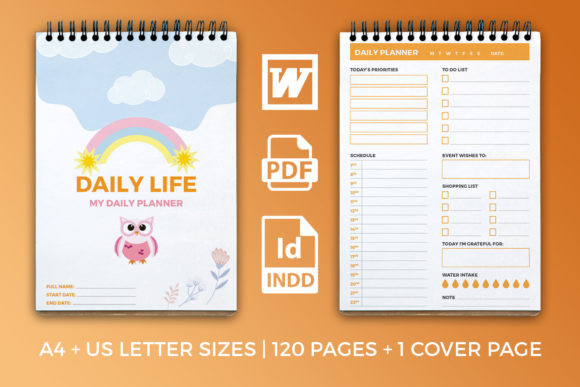
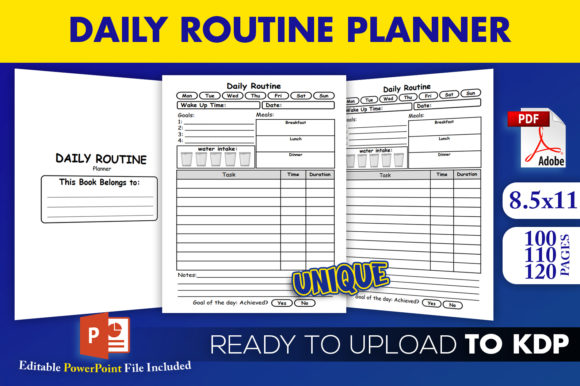
Beyond technical specs, the internal structure of a daily planner determines its commercial success. Adults researching planner interiors should evaluate whether the layout supports actual usage or merely fills pages. Some competitors offer minimalist designs with excessive white space to reduce ink costs, while others provide dense, structured layouts with hourly breakdowns, gratitude sections, and priority matrices.
This template’s 8.5″ x 11″ dimension provides ample real estate for functional elements that smaller trim sizes cannot accommodate. When comparing options, consider the end-user’s context. A desk-based professional may prefer the larger format and comprehensive daily structure this template facilitates, whereas a commuter might prioritize portability over page size. The "daily" focus implies repeated engagement; therefore, the usability of the writing space and the clarity of the prompts are more important metrics than aesthetic novelty. Reviewers should download preview files where available to assess whether the line weight, font size, and section proportions align with their target audience’s expectations.
Decision Factors: When This Template Is the Right Choice
No single resource fits every publishing strategy. Based on comparative evaluation, this Daily KDP Interior Template is best suited for specific scenarios. It is an optimal choice for publishers who need a compliant, no-bleed 8.5×11 foundation and possess the willingness to customize via PowerPoint. It is particularly valuable for those building a series, as the master slide functionality allows global changes across 120 pages in seconds—something impossible with flattened PDFs.
Conversely, this template may not be the right fit if:
- You Require Full Bleed: If your design vision extends artwork to the very edge of the paper, this no-bleed specification will not work without significant restructuring.
- You Need Unique Illustrations: As a structural template, it focuses on layout grids rather than artistic content. Publishers relying on hand-drawn aesthetics will need to source or create separate artwork.
- You Lack Presentation Software: Without access to PowerPoint or a compatible alternative, half the value proposition (customization) is inaccessible.
- Your Niche Demands Non-Standard Sizing: If market research indicates that 6×9 or 7×10 performs better for your specific sub-niche, forcing an 8.5×11 format may result in poor conversion despite having a quality interior.
Practical Implementation and Quality Assurance
For those proceeding with this template, a disciplined workflow ensures professional results. Always treat the provided PDF as a reference proof rather than the final deliverable if any edits are made. Open the PPTX file, apply necessary niche-specific modifications, and export to PDF using high-resolution settings. Verify the final file dimensions match exactly 8.5″ x 11″, as some export settings default to standard letter size with slight variations that trigger KDP warnings.
Additionally, consider the metadata and listing strategy that accompanies this interior. Since the template itself is non-exclusive, the competitive advantage must come from external positioning. Effective use of this resource involves pairing the functional 120-page interior with targeted keywords, compelling cover design, and accurate category selection. The interior provides the substance that fulfills the promise made by the cover; ensuring alignment between what customers expect based on your listing and what they receive in the 120-page layout is essential for maintaining positive reviews and long-term account health.
Ultimately, the Daily KDP Interior Template represents a pragmatic balance between convenience and flexibility. By providing both ready-to-upload and editable formats within standard KDP specifications, it reduces technical friction for publishers. Success depends not on the template alone, but on how effectively the user leverages its customization potential to serve a specific audience need within the broader daily planner ecosystem. Careful evaluation of these factors against individual publishing goals will determine whether this resource is the appropriate foundation for your next project.