Evaluating Daily Routine Planner KDP Interior Templates for Self-Publishing
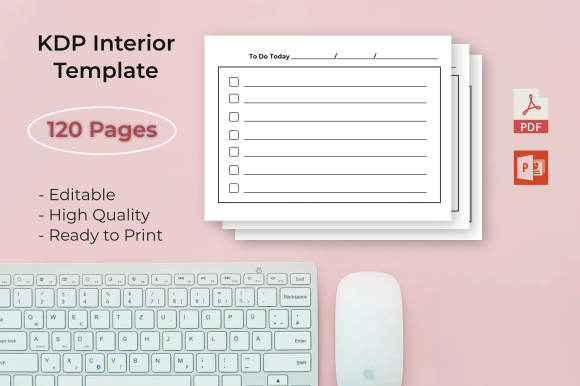
Selecting the right interior template is a critical step in the low-content and medium-content publishing process. For creators focusing on productivity and organization, a Daily Routine Planner KDP Interior serves as the foundational asset for building a sellable product. This specific digital resource package typically includes editable source files in PowerPoint format alongside pre-formatted PDF interiors ready for upload. Understanding the functional value, technical specifications, and strategic application of these assets allows publishers to make informed decisions about whether this particular template aligns with their business goals and quality standards.
Defining the Asset and Technical Specifications
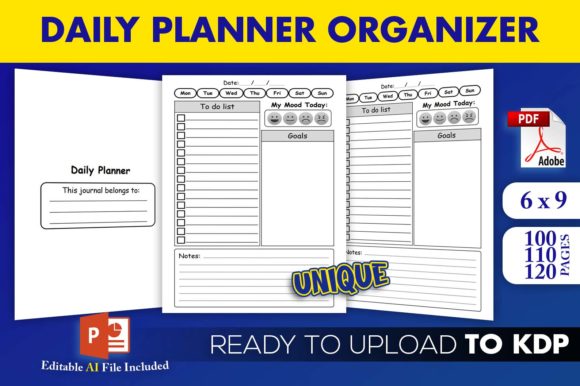
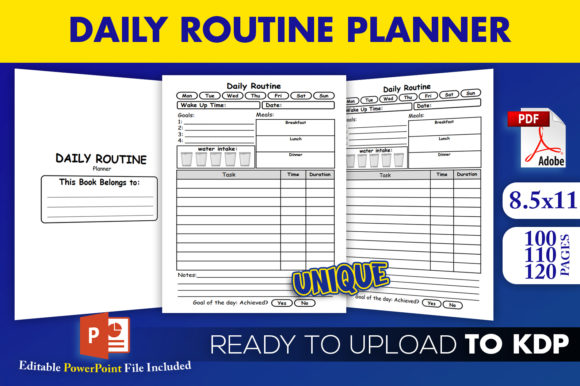
A Daily Routine Planner KDP Interior is more than a static document; it is a production-ready framework designed to meet Amazon’s printing specifications. The primary value proposition lies in its compliance and versatility. This specific package is engineered for an 8.5x11 inch trim size, which is the industry standard for full-sized planners and journals. This dimension offers ample space for detailed daily scheduling, habit tracking, and reflection sections without feeling cramped.
The inclusion of high-resolution interiors ensures that text remains crisp and lines remain sharp after printing. Low-quality templates often result in pixelated edges or gray-scale banding, which leads to negative customer reviews. Furthermore, the availability of three distinct page counts—100, 110, and 120 pages—addresses a common logistical challenge in KDP publishing: spine width calculation. Different page counts allow publishers to create variations of the same title or adjust the book's thickness to match competitor products without needing to redesign the layout from scratch. The fact that these files have been tested on KDP provides a layer of risk mitigation, reducing the likelihood of rejection due to margin errors or bleed issues during the automated review process.
Strategic Benefits of Editable Source Files
While ready-to-upload PDFs offer immediate convenience, the inclusion of an editable PowerPoint (PPTX) source file significantly alters the long-term utility of this asset. In the saturated planner niche, differentiation is essential. A static PDF limits a publisher to the designer’s original vision. Conversely, an editable source file transforms the template into a flexible base.
Publishers can modify fonts to match a specific brand aesthetic, adjust prompt wording to target niche audiences (such as students, remote workers, or new parents), or add proprietary branding elements like logos and watermarks. This editability supports the creation of a cohesive series rather than isolated products. It also facilitates A/B testing; a publisher can release two versions of a daily routine planner with different layouts or prompts using the same master file to determine which resonates better with buyers. For those evaluating this purchase, the decision should hinge on whether they intend to use the template "as-is" or as a starting point for customization. If customization is part of the strategy, the PPTX file is arguably the most valuable component of the bundle.
Assessing Fit for Different Publishing Models
This type of interior is particularly well-suited for publishers who prioritize speed-to-market and technical compliance over bespoke illustration. It is an ideal fit for:
- New Publishers: Those unfamiliar with KDP’s complex margin and bleed requirements benefit from pre-tested files, allowing them to learn the platform without risking account health.
- Series Builders: Creators looking to establish a consistent look across multiple titles will find the standardized 8.5x11 format and variable page counts useful for maintaining brand consistency.
- Niche Testers: Publishers validating new micro-niches within the productivity space can use these templates to launch minimum viable products quickly before investing in custom design.
However, there are tradeoffs to consider. Because these templates are commercially available, other sellers may be using identical or similar interiors. Relying solely on the unedited PDF version increases the risk of creating a duplicate product that struggles to gain visibility. Additionally, while PowerPoint is accessible, it is not a professional layout tool like Adobe InDesign or Affinity Publisher. Users accustomed to professional typesetting software may find the layer management and precision tools in PPTX limiting for complex redesigns.
When to Consider Alternatives
Despite the practical advantages, a Daily Routine Planner KDP Interior template is not universally the best choice. Evaluation requires honest assessment of one's design capabilities and market positioning. Alternatives may be worth considering in the following scenarios:
High-End Artistic Planners: If the goal is to create a luxury, art-forward planner with complex graphics, watercolor elements, or non-standard layouts, a structured PPTX template may feel too rigid. Custom design or hiring a freelance illustrator would yield better results for premium price points.
Non-Standard Trim Sizes: This asset is fixed at 8.5x11 inches. Publishers targeting the travel journal market (often 6x9) or pocket planner segment will need entirely different specifications. Resizing an 8.5x11 layout down to 6x9 often destroys the proportions and usability of the interior.
Unique Structural Needs: Standard daily routine planners follow predictable patterns. If the product concept involves unique tracking methods, specialized medical logs, or unconventional time-blocking systems, a generic template may require so much modification that starting from scratch becomes more efficient.
Practical Decision-Making Insights
For those still evaluating this resource, the decision should move beyond feature lists to practical application. Verify that your current software environment supports PPTX editing effectively. Ensure you understand how to export print-ready PDFs from PowerPoint, as improper export settings can negate the benefits of the high-resolution source files. Consider the competitive landscape of the specific "daily routine" keyword you intend to target; if the top ten results all appear to use similar stock interiors, the barrier to entry is low, but the ceiling for differentiation is also lower.
Ultimately, this Daily Routine Planner KDP Interior package represents a balance between efficiency and flexibility. It removes technical friction through pre-tested, high-resolution files and offers growth potential through editable sources. It is best viewed as a production accelerator rather than a complete business solution. Success depends less on the template itself and more on how the publisher leverages the editable components to create a distinct, valuable product for a specific audience. By weighing the convenience of ready-made compliance against the necessity of market differentiation, publishers can determine if this asset bridges the gap between their current capabilities and their publishing objectives.