KDP Interior Insurance Tracker: 8.5x11 PDF Template
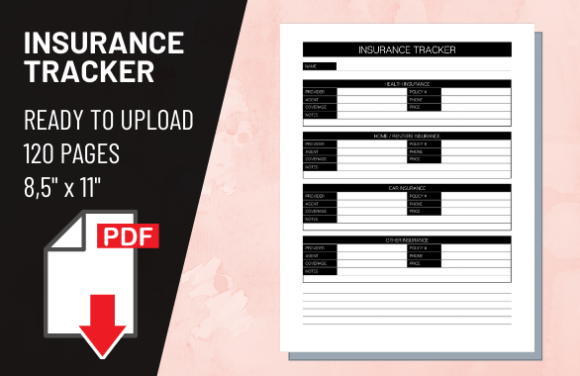
Managing risk is a fundamental part of financial stability, yet the paperwork involved often becomes a source of stress rather than security. A dedicated KDP Interior Insurance Tracker serves as a centralized, physical repository for policy details, renewal dates, and coverage limits. This specific 8.5″ x 11″ template provides a structured framework to organize these critical documents without the learning curve of complex software or the security concerns of cloud storage. With 120 pages formatted at 300 DPI and designed with no bleed, this file offers a professional-grade foundation for anyone looking to publish a functional logbook or create a personal organization system.
Defining the Utility of an Insurance Tracker Interior
At its core, this KDP interior is a layout designed for data entry and quick reference. Unlike generic notebooks, it includes pre-formatted tables and sections specifically tailored to insurance tracking. The 8.5″ x 11″ dimension is the industry standard for document organization, allowing the finished book to fit seamlessly into filing cabinets, desk drawers, and standard shelving units alongside other important records. The "no bleed" specification ensures that all text and table lines remain safely within the margins, preventing content from being trimmed during the printing process. This technical precision matters because an insurance tracker must be legible and neat; smudged lines or cut-off text can render a reference tool useless during an emergency.
The 300 DPI resolution guarantees crisp printing. When users are writing in small boxes or reading fine print regarding policy numbers and agent contact information, clarity is non-negotiable. This high-quality PDF eliminates the pixelation that often plagues amateur designs, ensuring that the final product looks professionally published whether used for personal peace of mind or sold as a commercial niche product.
Perspectives for Self-Publishers and Content Creators
For entrepreneurs and KDP publishers, this tracker represents a strategic asset in the low-content book market. The insurance niche is evergreen; people acquire new policies, renew existing ones, and adjust coverage regardless of economic cycles. However, the barrier to entry in this category is quality. Many creators struggle with formatting margins or creating consistent table structures across 120 pages. By utilizing a pre-made, verified template, publishers bypass the technical frustration of design software.
Commercial Value and Speed: For a marketer or side-hustler, time is inventory. Creating a 120-page interior from scratch can take dozens of hours of layout work and proofing. This ready-to-upload file compresses that timeline significantly. The value here lies in the ability to test the market quickly. If the goal is to build a portfolio of financial organization books, this tracker acts as a reliable volume builder. Because the file is standardized at 8.5″ x 11″ with no bleed, it integrates smoothly with Amazon’s upload requirements, reducing the risk of rejection or printing errors that lead to wasted royalties.
Creative Flexibility: While the interior is fixed, creators can differentiate their products through cover design and keyword targeting. One publisher might position this as a "Homeowner’s Policy Log," while another targets "Small Business Liability Tracking." The neutral, functional layout supports various sub-niches without requiring modification. This versatility allows experienced sellers to A/B test different marketing angles using the same high-quality internal structure.
Practical Applications for Small Business Owners and Freelancers
For freelancers, contractors, and small business operators, insurance is often a compliance requirement rather than a choice. General liability, professional indemnity, workers' compensation, and commercial auto policies each have distinct renewal cycles and certificate requirements. A digital spreadsheet can work, but many professionals prefer a physical backup that doesn't require battery life or internet access during audits or job site inspections.
This KDP Interior Insurance Tracker supports the operational rhythm of a growing business. Consider a freelance photographer who manages equipment insurance, liability for shoots, and health coverage. Using this 120-page format, they can dedicate specific sections to each category, noting premium amounts and claim history. The physical act of updating the book creates a ritual of review that digital tools often lack. For a contractor facing an audit, having a tangible record demonstrates organizational competence. In this context, the cost of the book is negligible compared to the potential fines for lapsed coverage or the time lost searching for digital files.
Educators and Financial Literacy Advocates
Financial educators and literacy coaches often seek tangible tools to teach abstract concepts. Insurance is notoriously difficult to explain because it involves paying for something you hope never to use. A structured tracker transforms insurance from a vague expense into a manageable component of a household budget.
Learning Value: Educators can use this template as a workbook for students or workshop participants. The 8.5″ x 11″ size provides ample space for notes and annotations next to the tracking tables. When teaching young adults or beginners about risk management, having them physically write down policy limits helps reinforce the reality of coverage gaps. The 120-page length allows for multi-year tracking, enabling learners to see how premiums change over time and how life events trigger coverage adjustments. This longitudinal view is difficult to replicate with single-sheet handouts.
Evaluating Fit: Quality, Usability, and Long-Term Use
Determining whether this specific KDP interior matches your needs requires assessing three key factors: presentation standards, functional longevity, and user experience.
Presentation and Professionalism
If you intend to sell this book, the 300 DPI standard is essential. Customers in the financial organization niche expect clean lines and sharp text. Blurry interiors result in negative reviews that permanently damage a listing. For personal users printing via KDP, this resolution ensures the book feels like a legitimate reference manual rather than a homemade craft project. The no-bleed design further enhances usability by keeping all content centered and safe from trim variations.
Functional Longevity
One hundred and twenty pages strikes a balance between portability and capacity. A thinner book might fill up too quickly, forcing users to start a new volume mid-year. A thicker book becomes unwieldy and expensive to print. At 8.5″ x 11″, this page count typically supports several years of active tracking or comprehensive coverage of multiple policy types. Users should evaluate their current portfolio complexity against this capacity. Those with simple needs may find it robust, while those managing enterprise-level risk might need supplementary systems.
Ease of Use vs. Customization
This template prioritizes immediate utility over customization. Beginners and those overwhelmed by paperwork will appreciate the "done-for-you" structure. There is no need to decide what columns to include or how to space rows; those decisions have already been made based on best practices. However, advanced users with highly unique tracking requirements might find the fixed layout limiting. It is important to review the preview or sample pages to ensure the provided fields align with your specific data points. If your primary goal is speed and reliability, this pre-formatted approach is superior. If your goal is bespoke design, this serves better as a structural inspiration or a baseline product.
Making the Decision
Ultimately, the KDP Interior Insurance Tracker is a tool for order. For the publisher, it is a vehicle for entering a practical niche with professional quality. For the business owner, it is a safeguard against administrative chaos. For the educator, it is a teaching aid that grounds financial theory in reality. The 8.5″ x 11″ format, combined with 300 DPI clarity and a substantial 120-page count, addresses the most common friction points in physical record-keeping: readability, durability, and capacity.
When selecting any organizational resource, consider the friction it removes. Does this template save hours of formatting time? Does it provide a clearer view of your financial safety net than your current method? Does the professional finish instill confidence in your customers or yourself? If the answer leans toward yes, this interior offers a pragmatic solution that bridges the gap between digital convenience and physical reliability. Whether you are building a publishing catalog or securing your family’s future, the right tracker turns passive worry into active management.