Evaluating the Running Log Book KDP Interior for Low-Content Publishing
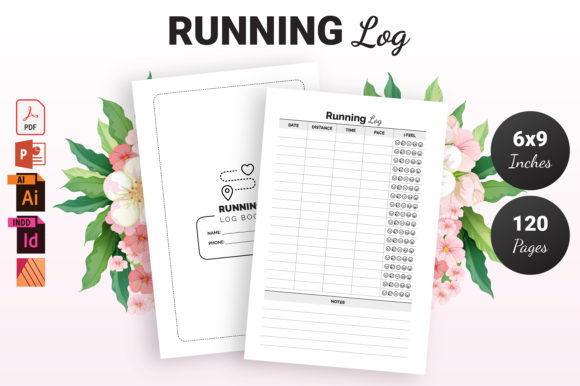
For self-publishers and digital product creators, the viability of a low-content book often hinges on the quality and flexibility of its interior template. The Running Log Book - KDP Interior is designed specifically to address the technical and aesthetic requirements of Amazon’s print-on-demand platform. Unlike generic trackers found in broader stationery bundles, this resource targets a specific niche with precise formatting. It provides a structured 120-page layout optimized for runners who track metrics such as distance, pace, heart rate, and perceived exertion. For publishers, the primary value proposition lies not just in the design itself, but in the inclusion of editable source files across multiple industry-standard formats, allowing for genuine customization rather than simple reselling.
Technical Specifications and Print Readiness
The foundation of any successful KDP upload is adherence to strict printing specifications. This Running Log Book - KDP Interior is configured at 6″ x 9″ inches, which remains the industry standard for fitness journals due to its portability and shelf presence. The file is set up with no bleed, a critical distinction for log books where content must remain safely within the margins. Bleed errors are among the most common reasons for rejection or poor user experience in low-content publishing; by utilizing a no-bleed setup, the interior ensures that writing spaces and tracking tables do not get trimmed during the binding process.
The 120-page count strikes a practical balance between utility and production cost. A thinner book may feel insubstantial to a buyer looking for a quarterly or annual tracker, while a thicker volume increases printing costs enough to erode royalty margins. At this length, the book can comfortably serve as a three-to-four-month training log or a full-year summary journal depending on how frequently the user runs. The high-quality print-ready PDF serves as the immediate deliverable for those who wish to publish without modification, ensuring crisp lines and legible text at the required resolution for offset-quality digital printing.
Source File Flexibility and Customization Potential
What distinguishes this asset from basic PDF-only templates is the inclusion of PPTX, AI, and INDD files. This multi-format approach acknowledges that KDP publishers possess varying levels of design proficiency and software access.
- Adobe InDesign (INDD): This is the professional standard for pagination and typography. Publishers using InDesign can adjust master pages, modify grid systems, and ensure consistent styling across all 120 pages. It allows for global changes to fonts or line weights, making it ideal for creating a cohesive brand series.
- Adobe Illustrator (AI): Best suited for vector-based adjustments. If the running log includes custom icons, route maps, or intricate header designs, the AI file allows for precise manipulation of these graphical elements without pixelation.
- PowerPoint (PPTX): A crucial inclusion for marketers, educators, or entrepreneurs who lack Adobe Creative Cloud subscriptions. PowerPoint offers a surprisingly capable environment for editing text, swapping images, and adjusting basic layouts. This lowers the barrier to entry, allowing users to personalize the Running Log Book - KDP Interior without additional software investment.
This flexibility transforms the product from a static commodity into a foundational asset. Publishers can alter the branding, add introductory coaching tips, include sponsor logos for local run clubs, or translate the content for international markets. The ability to edit the source files directly impacts long-term value, as it enables the creation of derivative works and niche variations that stand out in a saturated marketplace.
Practical Usability and End-User Experience
A log book fails if it is cumbersome to use mid-training or post-run. From a functional perspective, this interior prioritizes data entry efficiency. The layout typically avoids excessive decorative elements that distract from the core purpose: recording performance data. Adequate white space is essential; runners often fill out these logs when fatigued, and cramped fields lead to frustration and abandonment. The 6x9 form factor supports this usability, fitting easily into gym bags or backpacks without bending.
The structure generally supports both quantitative and qualitative tracking. While metrics like mileage and split times are standard, effective running journals also prompt reflection on sleep quality, nutrition, weather conditions, and injury status. This holistic approach aligns with current training philosophies that emphasize recovery and mental health alongside physical output. For the publisher, this means the book appeals to a broader demographic—from marathon trainees to casual joggers focused on wellness—increasing its potential market reach.
Audience Fit and Strategic Application
This Running Log Book - KDP Interior is particularly well-suited for several distinct creator profiles. Freelancers and small business owners in the fitness coaching space can use the editable files to create branded lead magnets or client resources. By adding their logo and specific training methodology, they transform a generic template into a proprietary tool that reinforces their expertise. Bloggers and content creators in the running niche can bundle this log book with digital courses or affiliate marketing efforts, providing tangible value to their audience.
Educators and corporate wellness coordinators may find the PPTX format especially useful for creating customized wellness challenges or team-building activities. The ability to quickly adapt the interior without professional design help makes it a practical resource for organizational use. Serious hobbyists and aspiring publishers benefit from the professional-grade layout as a learning tool, studying how proper margins, gutters, and typographic hierarchy contribute to a polished final product.
However, it is important to recognize limitations. This interior is a framework, not a complete business solution. Success on KDP still requires keyword research, cover design, and marketing. The template solves the production bottleneck, but it does not guarantee sales. Publishers must also be mindful of licensing terms; while customization is encouraged, simply re-uploading the unaltered PDF may lead to duplicate content issues on Amazon. The true ROI comes from leveraging the source files to create something unique.
Quality Assessment and Long-Term Value
In evaluating digital assets for publishing, consistency and reliability are paramount. The provided files demonstrate professional attention to detail, with clean vector lines and properly embedded fonts. This reduces the risk of pre-flight errors during the KDP upload process. The separation of formats also future-proofs the purchase; as software preferences evolve, having access to native files ensures the asset remains usable regardless of platform shifts.
From a financial perspective, the cost-per-page ratio is favorable compared to hiring a designer or purchasing single-format templates. The inclusion of four distinct file types effectively provides four products in one, maximizing utility for mixed-skill teams or individuals expanding their technical capabilities. For publishers building a catalog of fitness-related low-content books, this Running Log Book - KDP Interior serves as a reliable baseline that can be adapted into walking journals, cycling trackers, or triathlon logs with minimal additional effort.
Ultimately, this resource represents a pragmatic intersection of design quality and functional flexibility. It addresses the specific technical constraints of KDP while providing the creative latitude necessary for differentiation. Whether used as a standalone product or integrated into a broader coaching or content strategy, the editable nature of the interior ensures it remains a relevant tool in a publisher’s arsenal. The combination of print-ready reliability and source-file adaptability makes it a sound investment for those serious about the low-content publishing space, provided they approach it with a strategy for customization and audience alignment.