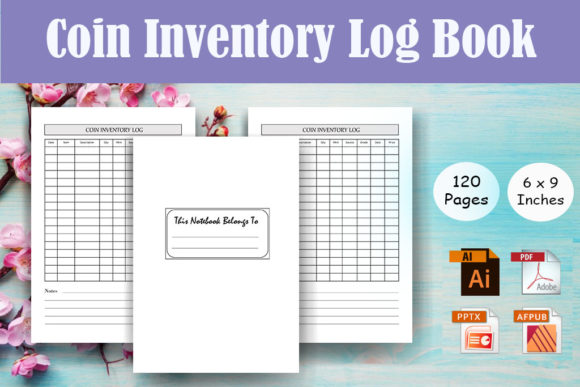
Streamlining Numismatic Publishing with a Professional Coin Inventory Log Book KDP Interior
The world of coin collecting is meticulous by nature. Numismatists do not simply gather currency; they catalog history, track market values, and preserve provenance. For publishers operating in the low-content or medium-content space on Amazon KDP, capturing this specific audience requires more than a generic notebook. It demands a specialized tool that understands the unique data points collectors need to record. A dedicated Coin Inventory Log Book - KDP Interior bridges the gap between a blank journal and a professional archival system, providing immediate value to buyers who are tired of drawing tables by hand or using inadequate spreadsheets.
When you offer a pre-formatted interior designed specifically for this niche, you are solving a tangible problem. Collectors often struggle to find physical logbooks that include fields for mint marks, grading standards, acquisition costs, and current estimated values all in one place. By providing a high-resolution, print-ready solution, you position your product as an essential accessory for their hobby rather than just another stationery item. The success of such a product lies in its utility, its print quality, and the flexibility it offers to both the end-user and the publisher.
Essential Data Fields for Numismatic Accuracy
The primary differentiator between a standard ledger and a true numismatic logbook is the specificity of the columns. When evaluating or creating a Coin Inventory Log Book - KDP Interior, the layout must reflect how collectors actually think. A well-designed 120-page interior should move beyond basic descriptions to include structured areas for critical metadata.
- Identification Details: Space for year, denomination, mint mark, and variety/designation.
- Grading Information: Dedicated columns for grade (e.g., MS-65, VF-30) and grading service (PCGS, NGC, ANACS) along with certification numbers.
- Financial Tracking: Separate fields for purchase price, date acquired, seller/source, and current estimated market value.
- Physical Attributes: Notes sections for composition, weight, diameter, and specific condition remarks like toning or errors.
- Provenance and Storage: Areas to record previous owners, auction lot numbers, and physical storage location (e.g., Safe #2, Drawer B).
This level of detail transforms a simple book into a comprehensive asset management tool. For the KDP publisher, ensuring these fields are legible and properly spaced is crucial. Crowded columns frustrate users with larger handwriting, while excessive white space wastes valuable page real estate. The balance achieved in a professionally tested interior ensures that every inch of the 6x9 trim size serves a functional purpose.
Technical Specifications and Print Readiness
In the competitive landscape of KDP publishing, file integrity is non-negotiable. Nothing damages a brand faster than blurry lines, margins that get trimmed off, or PDFs rejected by Amazon’s automated review system. This is why acquiring a Coin Inventory Log Book - KDP Interior that has been explicitly tested on KDP provides significant peace of mind. The technical foundation of your product determines its customer satisfaction rating.
High resolution is the baseline expectation. Lines must be crisp at 300 DPI or higher to ensure they reproduce cleanly on both cream and white paper stock. Furthermore, the trim size of 6x9 inches is the industry sweet spot for this category. It is large enough to accommodate detailed writing but compact enough to fit on a bookshelf alongside standard reference guides or to be carried to coin shows and club meetings. When your download includes a verified PDF, you eliminate the guesswork regarding bleed settings, safe zones, and gutter margins, allowing you to focus on marketing and keyword optimization rather than troubleshooting formatting errors.
Customization Through Editable Source Files
While a ready-to-upload PDF is convenient, the inclusion of editable source files elevates a KDP interior from a static product to a versatile business asset. Having access to AI (Adobe Illustrator), AFPUB (Affinity Publisher), and PPTX (PowerPoint) files empowers you to adapt the Coin Inventory Log Book - KDP Interior to evolving market trends or specific sub-niches without starting from scratch.
Consider the practical applications of these editable formats:
- Niche Differentiation: You can easily modify column headers to create specialized versions for ancient coins, error coins, or bullion investing, effectively multiplying your product line from a single master file.
- Branding Opportunities: Add your own logo, copyright page, or introductory content to build brand recognition and protect your intellectual property.
- Bundle Creation: Combine the logbook pages with educational content, checklists, or reference charts to create a higher-value "collector’s companion" book.
- Platform Diversification: Use the PPTX or AFPUB files to create digital versions for Etsy or Gumroad, catering to customers who prefer tablet-based inventory tracking.
This flexibility is particularly valuable when responding to customer feedback. If reviews indicate that users want more space for notes or a different font style, you can implement those changes in minutes using the provided source files and re-upload an improved edition. This iterative approach is key to long-term success in low-content publishing.
Integrating Physical Logs into Modern Collecting Workflows
It is worth addressing why physical logbooks remain relevant in an era of digital databases and smartphone apps. While digital tools excel at searchability and data aggregation, physical logs serve distinct psychological and practical functions in the collector's workflow. Understanding this helps in crafting better product descriptions and connecting with buyer intent.
Many serious collectors use a hybrid system. They may use online platforms for price checking and sales, but they rely on a physical Coin Inventory Log Book - KDP Interior for the initial intake process. Writing down details by hand reinforces memory and encourages closer inspection of the coin. There is also the aspect of security and permanence; a physical book cannot be hacked, deleted by a software update, or lost due to server failure. For estate planning purposes, a handwritten ledger often serves as the primary document heirs reference when assessing a collection's value.
Furthermore, the tactile experience aligns with the hobby itself. Coin collecting is sensory—appreciating the weight, texture, and visual appeal of metal. A well-bound logbook complements this experience. When marketing your KDP interior, highlighting these lifestyle benefits can resonate more deeply than simply listing page counts. You are selling organization, legacy preservation, and the satisfaction of maintaining a curated archive.
Strategic Considerations for Publishers
Before launching your version of this product, consider the broader ecosystem of numismatic publishing. The 120-page count included in this package is strategically chosen. It keeps the spine width sufficient for text (making the book look substantial on a shelf) while keeping printing costs low enough to maintain healthy royalty margins. At 6x9, this page count results in a book that feels durable without being unwieldy.
Quality assurance extends beyond the file itself. Always order a proof copy before making your Coin Inventory Log Book - KDP Interior live. Check the opacity of the lines to ensure they don't bleed through when users write with gel pens or markers. Verify that the binding allows the book to lay relatively flat, as collectors often need to reference the log while handling coins with both hands. These small physical considerations often dictate whether a customer leaves a five-star review or returns the product.
Additionally, think about the cover design synergy. The interior sets expectations for professionalism, so the cover must match. Avoid generic clip art; instead, opt for clean typography and imagery that signals expertise. Since you have editable interiors, you can even create matching cover templates to ensure visual consistency across your catalog. Ultimately, treating this logbook as a premium tool rather than a disposable notebook will attract serious collectors willing to pay for quality, thereby supporting a sustainable low-content business model.