Password Log Book KDP Interior: Custom Source Files
Launching a low-content publishing business requires more than just uploading a generic template; it demands a product that balances immediate usability with long-term brand potential. The Password Log Book KDP Interior provides this balance by offering a complete ecosystem of files rather than a single static document. For self-publishers targeting the growing demographic of adults who prefer physical security over digital storage, this 6″ x 9″ resource serves as both a ready-to-publish asset and a foundational design kit. The inclusion of editable source files in PowerPoint, Illustrator, and InDesign transforms what could be a simple upload into a scalable product line, allowing creators to adapt the interior to specific niches without starting from scratch.
Accelerating Time-to-Market with Print-Ready PDFs
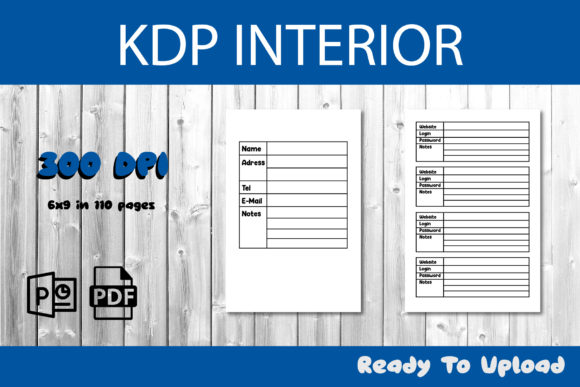
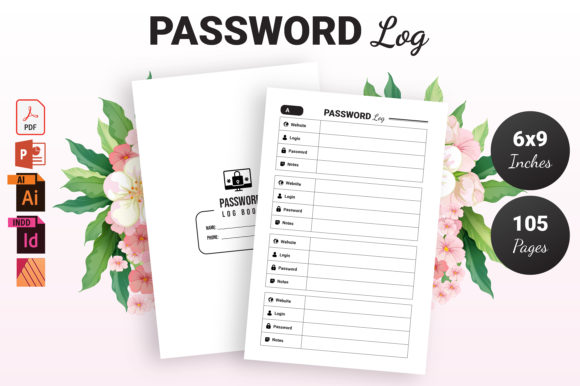
The most immediate value of this package is the high-quality, print-ready PDF. For entrepreneurs and marketers testing new keywords or seasonal trends, speed is often the deciding factor between capturing market share and missing an opportunity. This pre-formatted file adheres strictly to Amazon KDP specifications, featuring 105 pages at 6″ x 9″ dimensions with no bleed settings. This eliminates the common technical hurdles that delay publication, such as margin errors, gutter miscalculations, or resolution issues.
Consider a freelancer managing multiple client accounts who wants to create a branded password tracker as a lead magnet or bonus gift. Instead of spending ten hours designing tables and setting up master pages, they can download the PDF and have it listed within minutes. The "no bleed" specification is particularly practical for this category, as password logs typically require safe zones for writing near the spine. By handling these technical constraints beforehand, the interior allows publishers to focus their energy on cover design, keyword research, and marketing strategy rather than troubleshooting formatting errors.
Strategic Customization Through Multi-Format Source Files
While the PDF offers speed, the true longevity of this KDP interior lies in the included PPTX, AI, and INDD source files. Saturation is a genuine concern in the low-content book market, and differentiation is the only sustainable defense. Having access to the native design files enables publishers to modify the layout to serve distinct sub-niches without hiring a designer or learning complex software from zero.
- Adobe InDesign (INDD): Ideal for professional publishers who need to adjust master pages, change font families globally, or add specialized sections like "Security Questions" or "Wi-Fi Network Logs." This format maintains typographic integrity and allows for precise grid adjustments.
- Adobe Illustrator (AI): Best for creators focusing on visual branding. If your publishing imprint uses specific vector icons or decorative borders, the AI file allows you to integrate these elements seamlessly into the table structures without pixelation.
- PowerPoint (PPTX): A crucial inclusion for educators, hobbyists, or small business owners who may not own Adobe Creative Cloud. PowerPoint lowers the barrier to entry, allowing users to resize text boxes, alter header colors, or rearrange columns using familiar tools.
This multi-format approach supports a diverse range of users. A blogger writing about senior care might increase the font size and simplify the column structure using the PPTX file to create a "Large Print Password Keeper." Conversely, a tech educator might use the INDD file to add instructional sidebars about two-factor authentication. The ability to customize ensures the product remains relevant across different audience segments.
Optimizing Layout for User Experience and Retention
A password log book fails if the user finds it frustrating to write in. The 6″ x 9″ dimension selected for this interior is widely considered the industry standard for portability and desk utility, but the internal architecture matters equally. With 105 pages, the book offers substantial capacity without becoming unwieldy or expensive to print. This page count strikes a practical balance, providing enough space for hundreds of entries while keeping the spine width sufficient for legible text.
The layout design prioritizes functionality over decoration. Columns are spaced to accommodate varying handwriting sizes, and headers are clear without consuming excessive white space. For publishers, this functional design translates to better customer reviews. When a buyer receives a book that is intuitive to use, they are more likely to leave positive feedback and return for future purchases. Using the source files, you can further refine this experience based on customer feedback. If reviews indicate that the "Notes" section is too small, you can adjust the row height in the InDesign file and republish an improved edition, turning user data into product development.
Navigating Technical Specifications and Limitations
Understanding the specific parameters of this interior prevents costly mistakes during the publishing process. The "No Bleed" setting means all content must remain within the safe zone, typically 0.25 inches from the trim edge on the outside and 0.375 inches from the gutter. While this simplifies printing, it also imposes creative boundaries. Publishers looking to extend background colors or images to the very edge of the page will need to significantly rework the file or choose a different template.
Additionally, while the PowerPoint file offers accessibility, it has limitations compared to professional layout software. Text reflow in PPTX is not as robust as in InDesign, meaning significant structural changes may require manual adjustment of individual slides. Users should assess their comfort level with each format before committing to extensive modifications. For those entirely new to KDP, it is advisable to first publish the unaltered PDF to understand the platform's requirements before attempting to customize the source files. This staged approach reduces risk and builds confidence.
Building a Cohesive Brand Identity Across Publications
For serious publishers, a single book is rarely the end goal; it is part of a larger catalog. The editable nature of this Password Log Book KDP Interior facilitates brand consistency. By establishing a proprietary style guide—specific fonts, header styles, and iconography—you can apply these elements across this log book and other related products like address books or journals. This visual coherence helps customers recognize your publications in search results and fosters trust.
The source files act as a reusable asset library. Once you have customized the password log to match your brand, saving that modified file creates a master template for future projects. An entrepreneur selling organizational tools can ensure their password log matches their planner and notebook interiors perfectly. This level of polish distinguishes professional imprints from amateur uploads. Furthermore, owning the source files protects your business. Relying solely on third-party platforms or locked PDFs creates dependency; having the raw INDD and AI files ensures you retain full control over your intellectual property and production pipeline.
Evaluating Fit for Different Publishing Goals
While versatile, this specific interior is not a universal solution. It is optimized for standard alphanumeric password tracking. Publishers targeting highly specialized markets, such as cryptocurrency seed phrase storage or medical record keeping, may find the standard columns insufficient even with editing. In such cases, comparing this option against niche-specific templates is necessary. Similarly, those aiming for premium hardcover editions might prefer a larger trim size or higher page count to justify a higher price point.
However, for the core demographic of adults aged 20–50 seeking reliable, offline password management, this 6″ x 9″ format hits the sweet spot of utility and affordability. Professionals appreciate the discreet size for office drawers, while older adults value the straightforward layout. By leveraging the instant download capability and the flexibility of the source files, publishers can efficiently serve this broad market while retaining the agility to pivot as consumer preferences evolve. The combination of immediate readiness and deep customizability makes this interior a pragmatic foundation for sustainable low-content publishing.