Evaluating 200 Sudoku Puzzles for Kids 6x6 Vol.3: A Practical Guide for Parents and Educators
When selecting logic resources for children aged five to nine, the specific formatting of a puzzle book often matters as much as the content itself. 200 Sudoku Puzzles for Kids 6x6 Vol.3 represents a specialized niche within educational printables, focusing on the transitional 6x6 grid size rather than the standard 9x9 format found in adult books or the simplified 4x4 grids used for toddlers. This resource is designed as a ready-to-print PDF, offering a distinct set of advantages and limitations compared to pre-bound physical books or interactive digital apps. Understanding the structural nuances of this volume helps determine whether it aligns with your specific educational goals, printing capabilities, and the child’s current developmental stage.
The Strategic Value of the 6x6 Grid Format
The primary differentiator of this collection is the 6x6 grid structure. In the landscape of cognitive development tools, grid size dictates the complexity ceiling. While 4x4 puzzles introduce the basic concept of rows and columns, they often lack the depth required to sustain engagement beyond early kindergarten. Conversely, standard 9x9 Sudoku can introduce excessive frustration for children who have not yet developed advanced working memory or scanning techniques.
The 6x6 format serves as a critical bridge. It utilizes six numbers and six 2x3 subgrids, requiring multi-step logical deduction without overwhelming young solvers. When comparing 200 Sudoku Puzzles for Kids 6x6 Vol.3 to generic activity books, this specific sizing targets the "zone of proximal development" for first through third graders. It is particularly effective for children who have mastered mini-sudoku but are not yet ready for full-scale logic puzzles. If your objective is to build stamina and confidence before attempting larger grids, this format offers a more appropriate challenge curve than mixed-difficulty books that jump erratically between sizes.
Analyzing Volume and Layout Efficiency
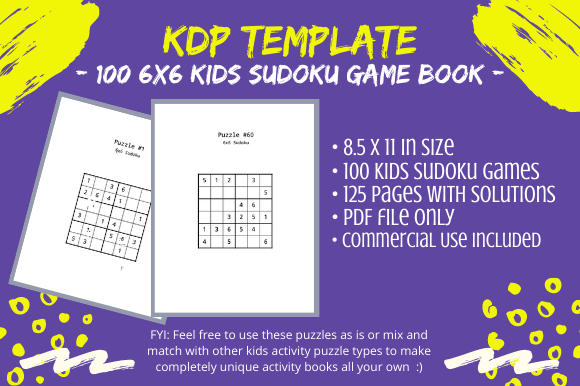
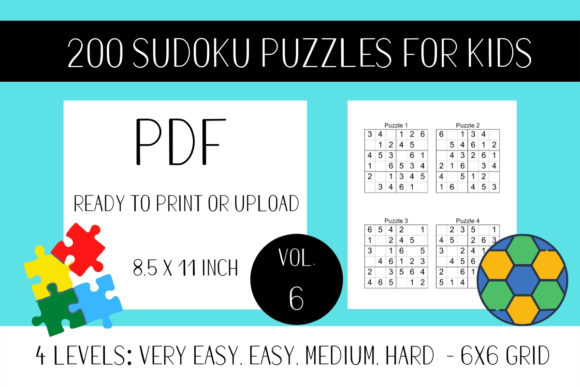
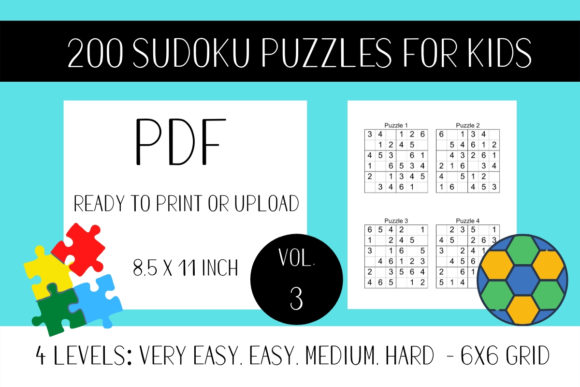
A significant factor in evaluating printable resources is the density of content relative to page count. This PDF contains 84 pages featuring 200 total puzzles. The layout places four puzzles per page, which maximizes paper efficiency while maintaining adequate whitespace for young hands. This density contrasts sharply with many commercial workbook alternatives that feature only one large puzzle per page, resulting in bulky books that are difficult to store or transport.
However, this high-density approach involves tradeoffs. Four puzzles per page means the individual grid size is smaller. For children with fine motor delays or those who prefer using thick markers rather than pencils, this compact spacing may be restrictive. In such cases, a lower-density alternative with fewer puzzles per page might be superior despite the higher paper consumption. Additionally, the inclusion of six answer keys per page streamlines the verification process for parents and teachers, reducing the time spent flipping between sections. This organizational choice supports high-volume use in classroom settings or homeschool environments where rapid feedback is essential for maintaining momentum.
Digital Flexibility Versus Physical Convenience
As a downloadable PDF, this product occupies a middle ground between disposable workbooks and reusable digital apps. The "ready to upload" nature of the file allows for immediate access, eliminating shipping wait times associated with physical goods. More importantly, it offers reproducibility. Unlike a bound book where a mistake ruins the page, a PDF allows users to reprint specific difficulty levels or replace damaged sheets. This makes 200 Sudoku Puzzles for Kids 6x6 Vol.3 particularly cost-effective for families with multiple children or educators managing a rotating student roster.
Conversely, this format requires access to a printer and ink, introducing an ongoing variable cost that bound books do not have. Users must also consider the tactile experience. Some children engage better with the texture of a bound spine and higher-quality paper stock than with standard printer paper. If the goal is screen-free relaxation during travel where printing is impractical, a physical book remains the more pragmatic choice. The digital format excels in structured learning environments where customization and repetition are prioritized over portability.
Assessing Difficulty Progression and Skill Building
This volume includes four distinct difficulty levels, a feature that distinguishes it from static puzzle collections. Effective skill acquisition requires scaffolding; children need to experience success at an easier level before encountering increased complexity. When researching alternatives, verify that the progression is clearly marked and logically sequenced. Some competing products label puzzles by difficulty but fail to adjust the solving techniques required, leading to artificial spikes in challenge.
In evaluating this specific collection, consider how the difficulty scaling aligns with the child's patience threshold. The four-tier system allows for differentiation within a single household or classroom. A younger sibling might work on Level 1 while an older child tackles Level 3, using the same printed resource. However, if a child requires highly granular progression with dozens of micro-steps between levels, a specialized curriculum-based workbook might offer smoother transitions. This PDF provides broad categorization suitable for general practice, but it may not replace targeted intervention materials for students with specific learning differences who require adaptive pacing.
Comparing Content Freshness and Series Continuity
Being designated as "Vol.3" implies this is part of a larger series. For long-term planning, this continuity can be beneficial, providing a consistent visual style and predictable difficulty curve across hundreds of puzzles. Familiarity reduces cognitive load associated with learning new rules or layouts, allowing the child to focus entirely on logic. Parents seeking a year-long supply of activities will appreciate the ability to purchase subsequent volumes without re-evaluating quality.
On the other hand, series-based content can sometimes suffer from repetitive pattern generation. If a child has already completed Volumes 1 and 2, assess whether Vol.3 introduces new variations or simply regenerates similar puzzles. Compared to standalone anthologies that curate diverse puzzle types, a dedicated series volume offers depth in one specific area at the expense of variety. If your goal is cross-training in different logic styles (e.g., mixing Sudoku with Kakuro or nonograms), a mixed-activity book would be a better fit. This volume is best suited for focused mastery of 6x6 Sudoku specifically.
Decision Factors for Different User Profiles
Selecting the right resource depends heavily on the intended use case. Below are practical scenarios to help determine fit:
- For Homeschool Curriculum Integration: The printable format and answer key density make this highly suitable for daily logic warm-ups. The ability to print only what is needed prevents waste and allows integration into binder-based portfolios.
- For Summer Learning Maintenance: The 200-puzzle volume provides sufficient content for several months of sporadic practice without feeling like a heavy textbook. The compact layout makes it easy to include in vacation packets.
- For Special Education or Therapy: Consult with the therapist regarding grid size appropriateness. While 6x6 is excellent for working memory, the four-per-page layout may require modification (such as cutting pages into individual strips) to reduce visual clutter for neurodivergent learners.
- For Casual Entertainment: If the primary goal is unstructured play rather than skill building, the structured difficulty levels might feel too academic. App-based alternatives with gamification elements may yield higher engagement for reluctant participants.
Technical Considerations for Printing and Usage
Because this is a user-managed production resource, the final quality depends on your equipment. The 8.5″ x 11″ standard size ensures compatibility with home printers, but users should verify margin settings before batch printing. Some PDFs require "fit to page" adjustments to prevent cutoff, which can inadvertently shrink the already compact 6x6 grids. Testing a single page first is a necessary step that bound book users never face.
Paper weight also influences the experience. Standard 20lb copy paper is sufficient for pencil use, but if children prefer erasing frequently or using gel pens, upgrading to 24lb or 28lb paper prevents bleed-through and tearing. This adds to the per-unit cost but enhances durability. When comparing against a $7.99 mass-market paperback, calculate the total cost of ink and premium paper to ensure the digital option remains economically viable for your volume of use. For low-volume users needing only 20-30 puzzles, a physical book may be cheaper; for high-volume users needing 200+ reproducible puzzles, the PDF typically offers better value.
Making an Informed Selection
200 Sudoku Puzzles for Kids 6x6 Vol.3 fills a specific functional role: providing high-volume, appropriately scaled logic practice in a flexible digital format. It excels for users who value reproducibility, space efficiency, and targeted 6x6 skill building. It is less ideal for those seeking tactile luxury, zero-prep portability, or multi-genre variety. By weighing the tradeoffs between digital flexibility and physical convenience, and by honestly assessing the child’s current relationship with logic puzzles, caregivers can select a resource that supports sustainable cognitive growth rather than temporary entertainment. The decision ultimately rests on whether the benefits of customizable, printable content outweigh the logistical requirements of home production for your specific situation.